Holter vs Event Monitor vs Resting ECG: Choosing the Right Test
Choosing the right rhythm test depends on how often the patient’s symptoms occur.
Comparison
| Test | Duration | Best for |
|---|---|---|
| Resting 12-lead ECG | ~10 seconds | Baseline, ongoing symptoms, ischaemia, conduction |
| Holter monitor | 24–48 hours | Daily symptoms, AF burden, rate control |
| Event / patch monitor | Days to weeks | Infrequent symptoms |
| Implantable loop recorder | Months to years | Rare unexplained syncope |
Resting ECG
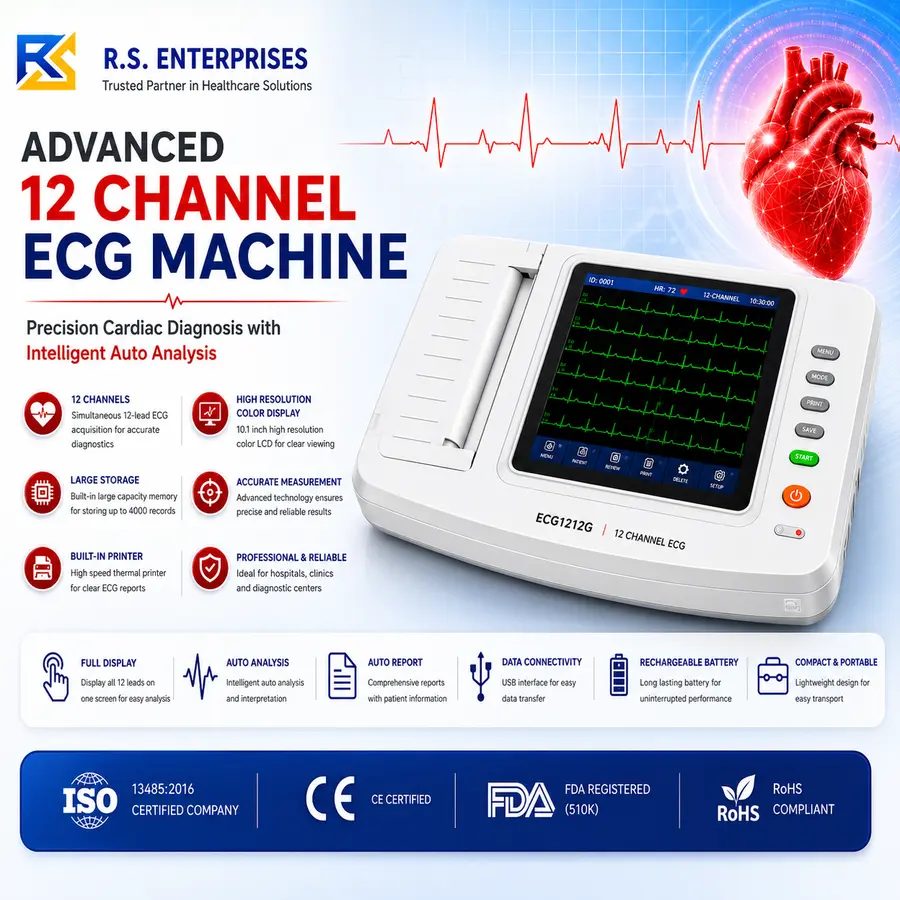
Quick and essential, but it can miss intermittent arrhythmias. See 12-lead ECG recording.
Holter
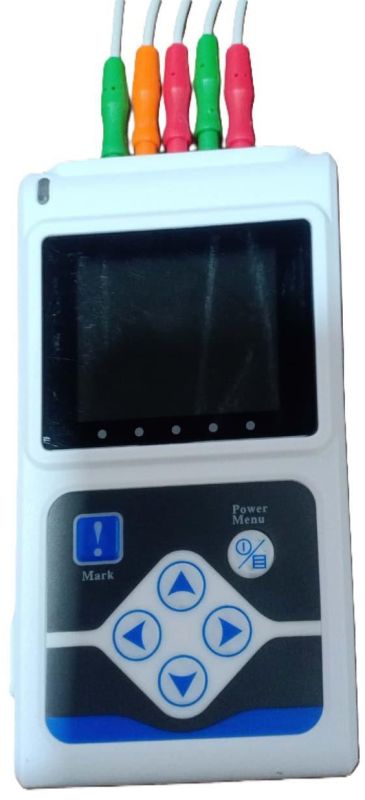
Continuous recording with full analysis of arrhythmias, HRV and pauses. The CONTEC TLC9803 is a compact 3-channel option. See the Holter guide.
Event monitors
Patient-activated or auto-triggered recording over longer periods. Useful when symptoms are infrequent.
Practical advice for clinics
- Start with resting ECG and Holter, which cover most needs.
- Refer to specialist centres for longer-term monitoring when needed.
- Make sure symptom diaries are completed.
Equipment from RS Enterprises
ECG Holter Machine
3-channel 24-hour Holter with arrhythmia, HRV and pacemaker analysis. ₹65,000 – ₹75,000
Frequently Asked Questions
Which test for daily palpitations?
A Holter monitor is usually appropriate.
Which test for monthly fainting?
Longer-term event or patch monitoring is often more useful.
Should clinics own a Holter?
Cardiology clinics and diagnostic centres commonly do; it is a frequently ordered test.
This article is for general information for healthcare buyers and professionals and is not medical advice. Clinical decisions should be made by qualified practitioners.