
Cardiology
How to Record a 12-Lead ECG: Step-by-Step Guide for Staff
A clean 12-lead ECG takes a few minutes when done properly. Use this guide to train nurses and technicians.
1. Prepare the patient
- Explain the procedure and ensure privacy.
- Lying supine, relaxed, arms at the sides.
- Remove metal objects near the electrode sites if needed.
- Keep the room warm to prevent shivering.
2. Prepare the skin
- Clean with an alcohol swab or soap and water and dry well.
- Shave hair at electrode sites if needed.
- Lightly abrade oily skin for better contact.
3. Place electrodes
- Limb electrodes: RA, LA, RL, LL on the wrists and ankles (or proximal limbs, consistently).
- Chest electrodes: V1–V6 at standard positions. See our detailed ECG electrode placement guide.
4. Machine settings
- Paper speed: 25 mm/s.
- Gain: 10 mm/mV.
- Filters: AC (50 Hz) and muscle filters as needed.
- Enter patient details (name, age, sex, ID).
5. Record
- Ask the patient to breathe normally and stay still.
- Check the screen for a stable baseline in all leads.
- Record and print or save.
6. Check quality
- All 12 leads present and labelled.
- No major artifacts. See ECG artifacts troubleshooting.
- Calibration pulse visible.
- Lead I mostly upright (if inverted, suspect limb lead reversal).
Common mistakes
- Chest electrodes placed too high.
- Limb lead reversal.
- A cold or talking patient.
- Dry or expired electrodes.
Equipment features that help
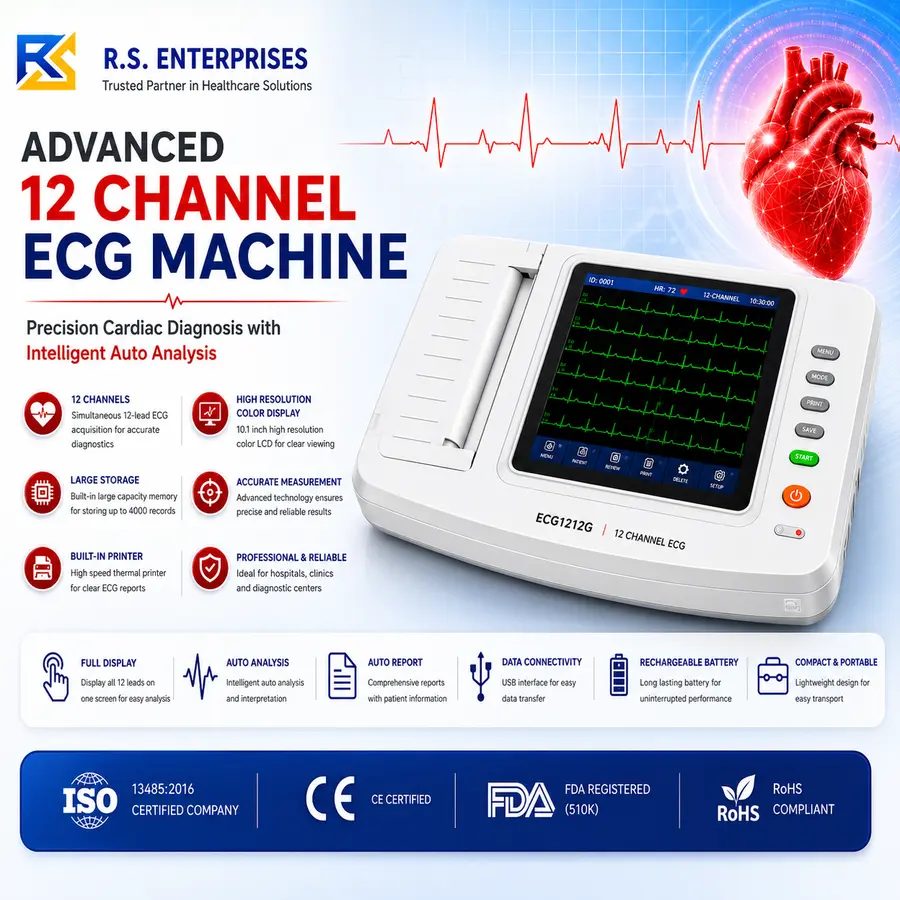
A colour touchscreen, lead-off detection and automatic measurements make good recordings easier. The Maestros 12 Channel ECG prints A4 reports in 3L, 6L or 12L formats.
Featured product
12 Channel ECG Machine
12 channel interpretive ECG with 5" touch display and A4 printer. ₹60,000 – ₹1 lakh
Frequently Asked Questions
Why 10 electrodes for 12 leads?
4 limb and 6 chest electrodes produce 12 leads through electrical combinations.
What does 10 mm/mV mean?
Standard calibration — a 1 mV signal produces a 10 mm deflection.
Should I use the filter?
Use filters appropriately; overuse can distort the ECG.
This article is for general information for healthcare buyers and professionals and is not medical advice. Clinical decisions should be made by qualified practitioners.