Holter Monitoring Guide: Uses, Procedure and Equipment
A resting ECG captures about ten seconds of heart activity. Many rhythm problems are intermittent, and a Holter monitor records the ECG continuously while the patient goes about normal life.
When is Holter monitoring ordered?
- Palpitations.
- Unexplained dizziness or syncope.
- Suspected intermittent atrial fibrillation.
- Assessing rate control or antiarrhythmic therapy.
- Pacemaker function evaluation.
- Post-myocardial infarction risk assessment (in some settings).
The procedure
- Skin prep and electrode placement on the chest.
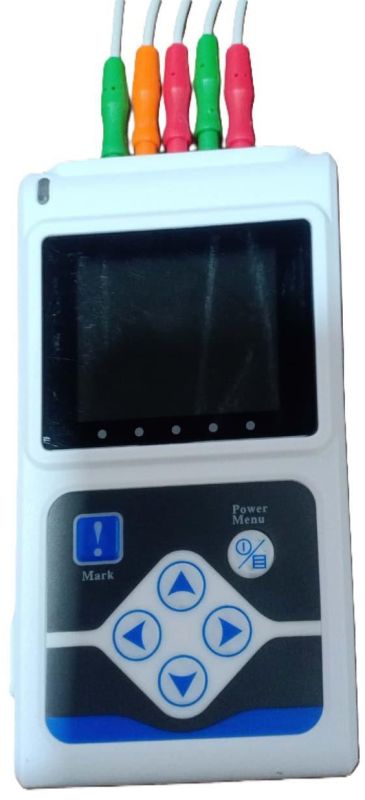
- A small recorder (the CONTEC TLC9803 weighs 105 g) runs on AA batteries.
- The patient keeps a symptom diary.
- The recorder is returned after 24 hours (or the set duration).
- Data is downloaded over USB and analysed.
Analysis
The software provides:
- Heart rate trends.
- Arrhythmia detection and classification.
- Pauses.
- HRV, HRT and TWA analysis.
- Pacemaker detection.
- ST trend analysis.
Patient instructions
- Continue normal activities.
- Note the time of symptoms.
- Avoid getting the device wet.
- Don’t disconnect electrodes.
Equipment
The CONTEC TLC9803 Holter offers 3-channel recording, up to 10,000 Hz sampling and USB 2.0 transfer at ₹65,000–75,000.
Holter vs other monitors
For infrequent symptoms (weekly or monthly), event monitors or longer-term patches may be more useful.
Related: TMT stress test guide.
ECG Holter Machine
3-channel 24-hour Holter with arrhythmia, HRV and pacemaker analysis. ₹65,000 – ₹75,000
Frequently Asked Questions
Can I bathe with a Holter?
Usually not; keep the recorder dry unless the device is rated otherwise.
How long is the recording?
Commonly 24 hours; longer recordings may be used.
What if symptoms are rare?
Event or patch monitors may be better for infrequent symptoms.
This article is for general information for healthcare buyers and professionals and is not medical advice. Clinical decisions should be made by qualified practitioners.