
Cardiology
ECG Interpretation Software: What It Can and Cannot Do
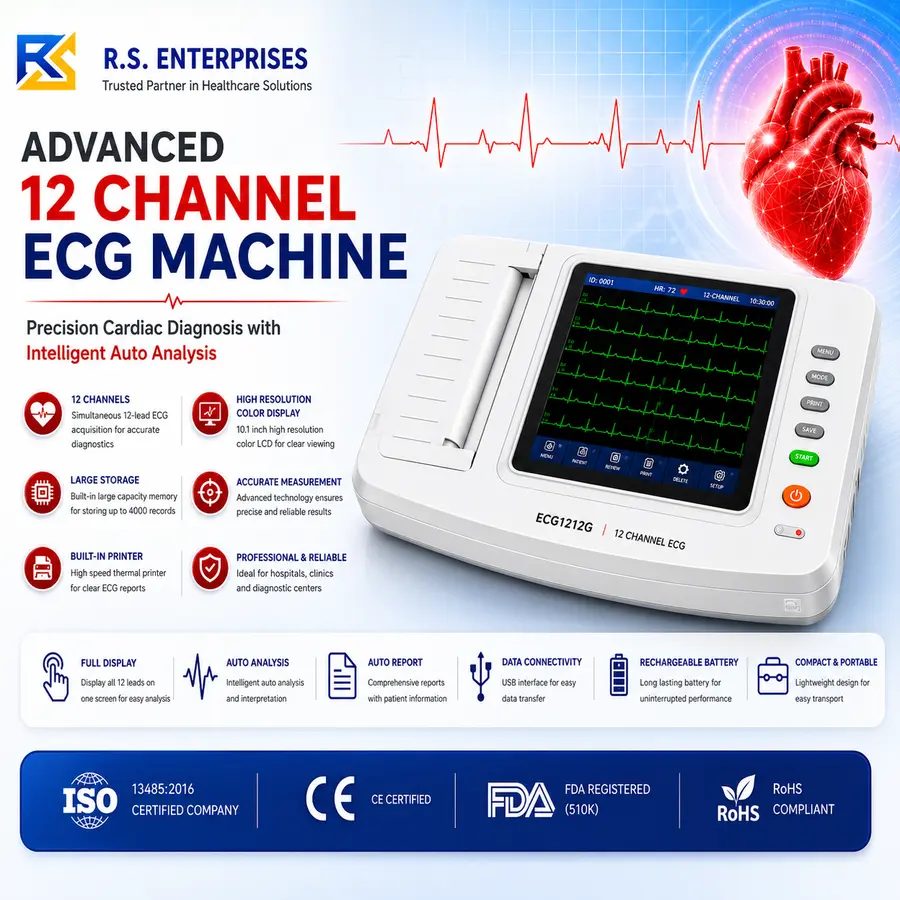
Most modern ECG machines print an automated interpretation. It is a helpful assistant, but it does not replace a clinician.
What it does well
- Measures heart rate, PR, QRS, QT/QTc and axis consistently.
- Flags common patterns quickly.
- Supports triage in busy settings.
Where it struggles
- Arrhythmias. Atrial fibrillation with artifact, flutter and complex rhythms.
- Paced rhythms.
- Noisy tracings. Artifacts can produce false statements.
- Subtle ischaemia. Clinical context is critical.
- Lead reversal. May be misread as pathology.
Best practice
- Record a high-quality tracing. See how to record a 12-lead ECG.
- Read the ECG yourself first, then compare with the machine statement.
- Correlate with symptoms and history.
- Compare with previous ECGs.
- Seek expert review when uncertain.
Equipment
The Maestros 12 Channel ECG and ECGSmart-3 provide interpretation and arrhythmia detection as decision support.
Featured product
12 Channel ECG Machine
12 channel interpretive ECG with 5" touch display and A4 printer. ₹60,000 – ₹1 lakh
Frequently Asked Questions
Can a GP rely on machine interpretation?
Use it as a guide; confirm with clinical correlation and expert review when in doubt.
Are measurements accurate?
Interval measurements are generally useful, but artifacts can affect them.
Does better software mean fewer errors?
Better algorithms help, but recording quality matters just as much.
This article is for general information for healthcare buyers and professionals and is not medical advice. Clinical decisions should be made by qualified practitioners.