What Is a Pulmonary Function Test (PFT)? Types and Uses
A pulmonary function test (PFT) measures how well the lungs work. The term covers several tests, and spirometry is by far the most common.
Spirometry
The patient takes a full breath in and blows out as hard and fast as possible into a mouthpiece. The spirometer measures:
- FVC (forced vital capacity). Total air exhaled forcefully.
- FEV1. Air exhaled in the first second.
- FEV1/FVC ratio. A key marker of airway obstruction.
- PEF and FEF25–75. Peak and mid-flow rates.
Spirometry can also include SVC (slow vital capacity) and MVV (maximum voluntary ventilation).
Other PFTs
- Lung volumes (body plethysmography or gas dilution): total lung capacity and residual volume.
- Diffusion capacity (DLCO): gas transfer across the lungs.
- Bronchodilator reversibility: spirometry before and after an inhaler.
- Bronchial challenge tests: airway hyper-responsiveness.
When are PFTs ordered?
- Diagnosis of asthma and COPD. See spirometry for asthma and COPD.
- Breathlessness or chronic cough.
- Pre-operative assessment. See PFT for pre-op.
- Occupational lung screening. See occupational screening.
- Monitoring of interstitial lung disease or treatment.
Patient preparation
- Avoid smoking, heavy meals and vigorous exercise beforehand.
- Wear loose clothing.
- Follow instructions about inhalers.
- Inform staff about recent surgery, chest pain or illness.
Equipment
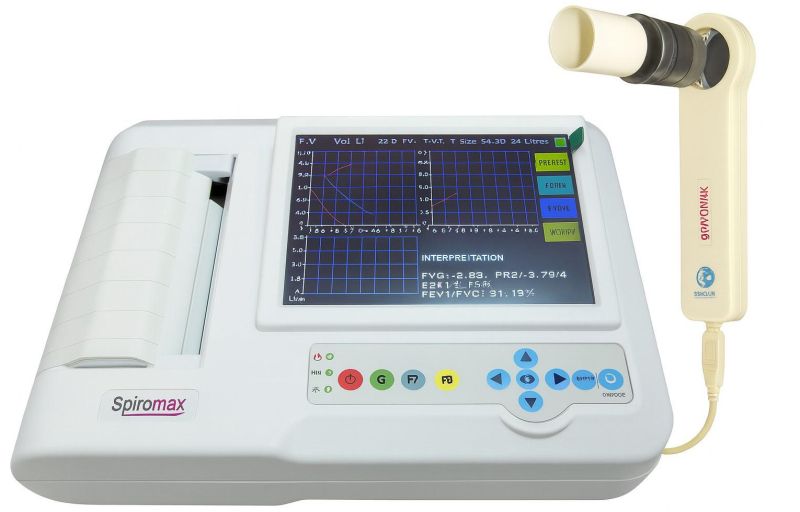
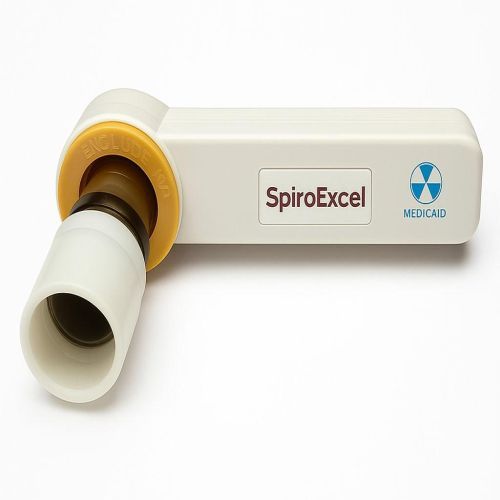
Clinics usually start with a spirometer: the PC-based SPIROEXCELL or the portable SPIROMAX. See the PFT price guide.
PFT Machine (PC-Based Spirometer)
USB PC-based spirometer with digital turbine and automatic interpretation. ₹35,000 – ₹50,000
Frequently Asked Questions
Is a PFT painful?
No, but it requires effort — deep breaths and forceful exhalation.
How long does spirometry take?
Usually 15–30 minutes including repeats.
Should I stop inhalers before PFT?
Only if your doctor instructs — some tests require withholding bronchodilators.
This article is for general information for healthcare buyers and professionals and is not medical advice. Clinical decisions should be made by qualified practitioners.