EMG, NCV and Evoked Potentials: Uses and Benefits Explained
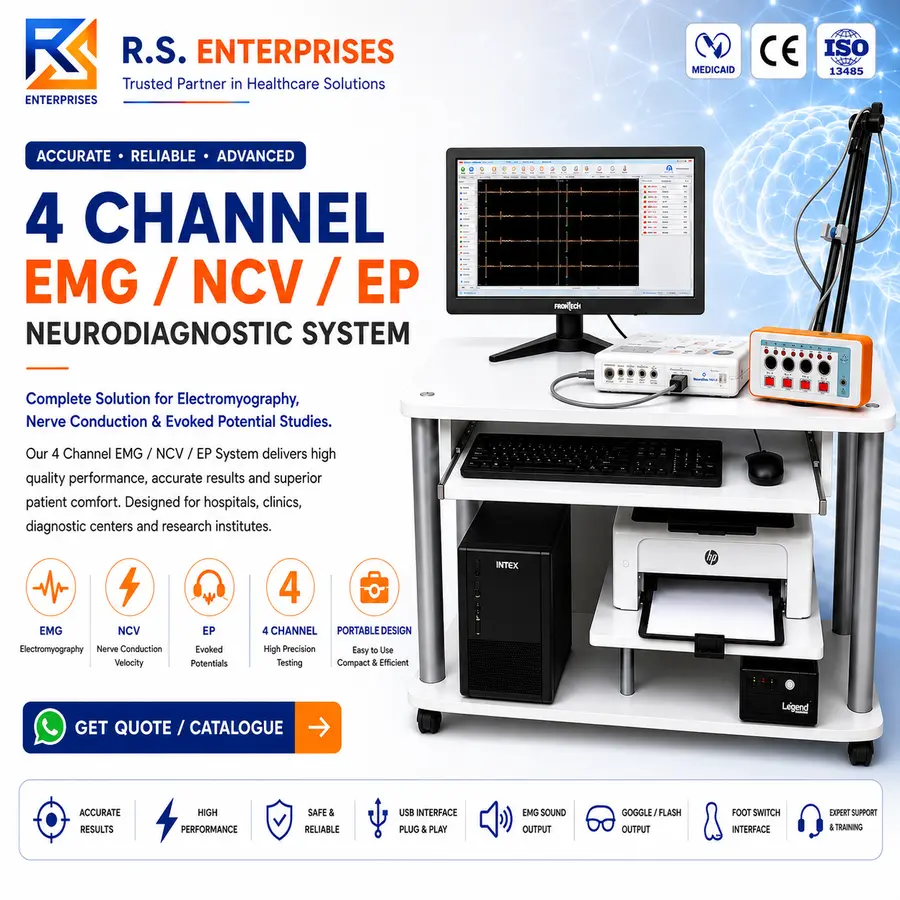
Electrodiagnostic tests extend the clinical examination, letting doctors measure how nerves and muscles actually work. One system, such as the NEUROSTIM EMG/NCV/EP, can perform all three test types.
Nerve conduction studies (NCS / NCV)
A nerve is stimulated at one point and the response is recorded further along the nerve or over a muscle. The system measures:
- Latency. How long the signal takes.
- Amplitude. How many fibres are responding.
- Conduction velocity. Speed, which drops in demyelination.
Special studies include F-waves, H-reflexes, the blink reflex and repetitive nerve stimulation for neuromuscular junction disorders.
Electromyography (EMG)
A fine needle electrode records electrical activity in a muscle at rest and during contraction. EMG shows whether weakness comes from nerve damage (neurogenic) or muscle disease (myopathic), and how long-standing it is.
Evoked potentials (EP)
EPs measure the brain’s response to a sensory stimulus:
- VEP. Visual pathway, for example in optic neuritis or multiple sclerosis.
- BAER/AEP. Auditory brainstem pathway.
- SSEP. Somatosensory pathways in the spinal cord and brain.
- P300 and late responses. Cognitive and research applications.
Read more in our evoked potentials guide.
Conditions diagnosed
- Carpal tunnel syndrome and other entrapments
- Diabetic and other peripheral neuropathies
- Radiculopathy (pinched nerve roots)
- Guillain-Barré syndrome and CIDP
- Myopathies and myositis
- Myasthenia gravis
- Motor neuron disease
- Multiple sclerosis (EPs)
Benefits
- Objective, quantitative findings.
- Localises the problem: nerve, root, junction or muscle.
- Tracks progression and recovery.
- Office-based and relatively low cost.
Equipping a lab
A 2 or 4 channel EMG/NCV/EP system, stimulators, surface and needle electrodes, LED goggles and headphones, a comfortable couch and a warm room (cold limbs slow conduction). See our EMG lab setup guide.
EMG / NCV / EP Machine (4 Channel)
Dual channel EMG/NCV/EP upgradeable to 4 channels. ₹2 lakh – ₹3 lakh
Frequently Asked Questions
Is EMG painful?
NCS uses brief electrical pulses that feel like a tap; needle EMG causes mild discomfort.
How long does an EMG/NCV take?
Usually 30–60 minutes depending on the number of nerves and muscles.
Who performs these tests?
Neurologists or physiatrists trained in electrodiagnosis, assisted by technicians.
This article is for general information for healthcare buyers and professionals and is not medical advice. Clinical decisions should be made by qualified practitioners.