
tDCS Safety and SHAM Mode: Guidelines for Clinics and Labs
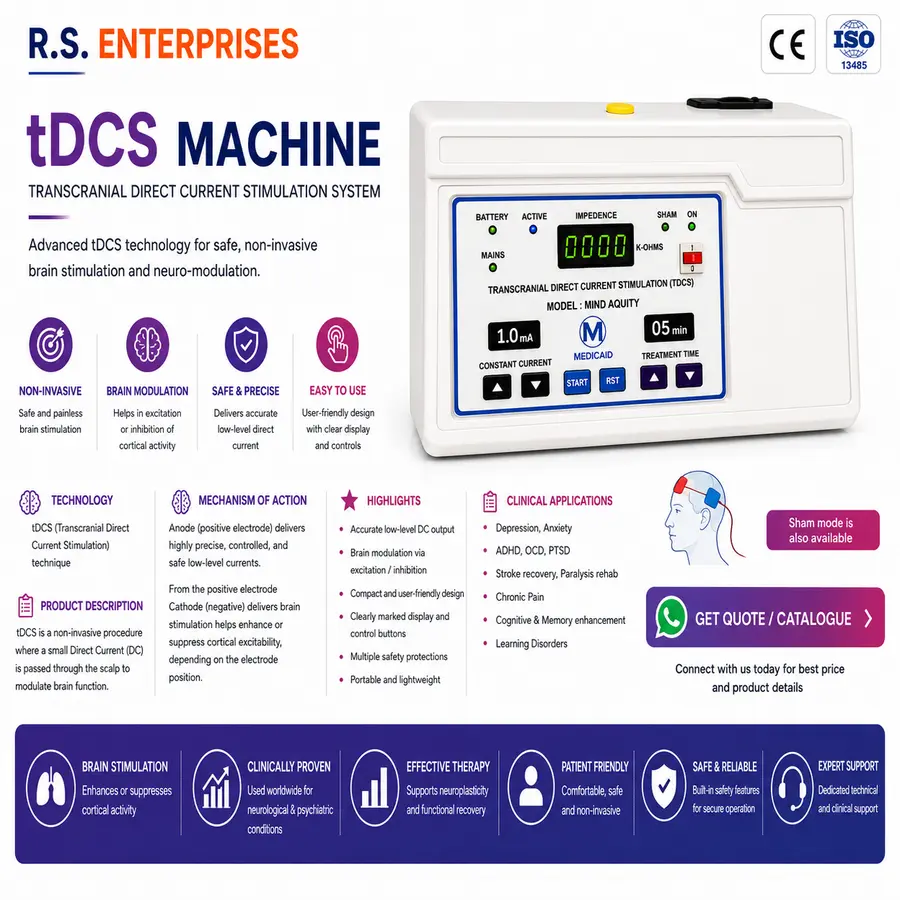
tDCS has an excellent safety record when used within standard parameters and with proper technique. Here are the key practices.
Standard parameters
- Current: typically 1–2 mA; higher intensities are used in some research.
- Duration: usually 20–30 minutes.
- Electrode area: adequate size (e.g., 25–35 cm² sponges) to keep current density comfortable.
Common sensations and side effects
- Tingling or itching under the electrodes.
- Mild redness that fades after the session.
- Occasional headache or fatigue.
Preventing skin problems
- Inspect the skin before every session.
- Use properly soaked sponges and replace worn electrodes.
- Make sure electrodes are firmly in contact.
- Use devices with impedance monitoring and auto shut-off, such as the MA-tDCS.
Screening considerations
Assess and document:
- Metal implants in the head or electronic implants.
- Skin conditions at the electrode sites.
- Seizure history and current medications.
- Pregnancy.
SHAM mode explained
In SHAM mode the device ramps current up for a short period and then down again. Participants feel the same initial tingling as in active stimulation but receive no sustained current. This allows placebo-controlled, double-blind studies, which are essential for rigorous research.
Documentation
Log each session: date, montage, current, duration, sensations and any adverse effects.
Training
RS Enterprises includes montage and safety training with every tDCS supply. See also tDCS montages and tDCS for research labs.
tDCS Machine
Touchscreen tDCS with SHAM mode, 0.5–4 mA and impedance monitoring. ₹75,000 – ₹80,000
Frequently Asked Questions
Who should not receive tDCS?
Assess people with metal implants in the head, skin lesions at sites, implanted electronic devices or other medical conditions with a clinician.
What causes skin burns?
Usually poor contact, dry sponges or damaged electrodes — impedance monitoring helps prevent this.
Can participants tell SHAM from real tDCS?
SHAM is designed to feel similar initially; blinding is generally effective at common intensities.
This article is for general information for healthcare buyers and professionals and is not medical advice. Clinical decisions should be made by qualified practitioners.


