
tDCS Montages and Electrode Placement: A Practical Guide
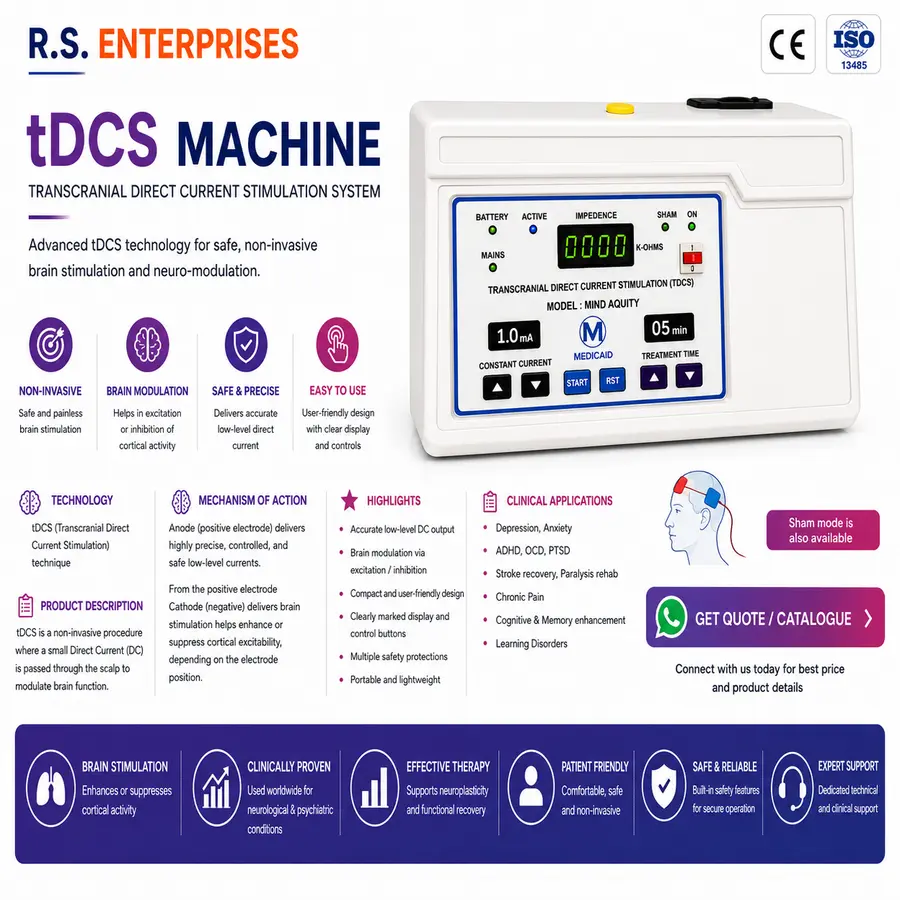
The montage, meaning where the anode and cathode sit, determines which brain region tDCS mainly affects. Consistent placement is essential for reliable results.
Using the 10-20 system
Electrode positions are usually defined with the EEG 10-20 system. Measure carefully or use a positioning cap.
Common montages
| Application | Anode | Cathode |
|---|---|---|
| Depression | F3 (left DLPFC) | Fp2 / right supraorbital or F4 |
| Motor (right hand) | C3 (left M1) | Right supraorbital |
| Motor (left hand) | C4 (right M1) | Left supraorbital |
| Bilateral motor | Affected M1 | Unaffected M1 |
| Language (research) | Left frontal/temporal sites | Contralateral region |
Protocols vary; follow the evidence and your clinician’s prescription.
Electrode types
- Sponge electrodes with saline: the most common.
- Carbon rubber with gel or sponge.
- Ag/AgCl electrodes.
- HD electrodes for focal ring montages.
The MA-tDCS supports all of these options.
Preparation steps
- Inspect the skin. Avoid cuts, rashes or broken skin.
- Clean the skin and part the hair where possible.
- Moisten sponges with saline, enough to be moist but not dripping.
- Secure the electrodes with a head strap or cap.
- Check impedance. The device will not ramp up if contact is poor.
- Ramp up, deliver the session, then ramp down.
Current density
Current density is current divided by electrode area. Using adequately sized electrodes keeps density within comfortable limits.
Documentation
Record the montage, current, duration, sensations and any skin changes for each session. The MA-tDCS therapy log helps with this.
See tDCS safety and SHAM for more.
tDCS Machine
Touchscreen tDCS with SHAM mode, 0.5–4 mA and impedance monitoring. ₹75,000 – ₹80,000
Frequently Asked Questions
How much saline should sponges have?
Enough to be moist but not dripping — excess saline spreads current.
What electrode size is common?
Sponge electrodes of about 25–35 cm² are common in conventional tDCS.
What is HD-tDCS?
High-definition tDCS uses small electrodes in ring arrangements for more focal stimulation.
This article is for general information for healthcare buyers and professionals and is not medical advice. Clinical decisions should be made by qualified practitioners.


