
rTMS in Stroke Rehabilitation: Current Use and Equipment Needs
After a stroke, the balance of activity between the two hemispheres changes. Brain stimulation aims to support rehabilitation by influencing these changes during the period when the brain is reorganising.
The rationale
- The affected hemisphere often shows reduced excitability.
- The unaffected hemisphere may become over-active and inhibit the affected side.
- rTMS can inhibit the unaffected side (low frequency, ~1 Hz) or excite the affected side (high frequency or iTBS).
Areas of application
- Upper-limb motor recovery.
- Aphasia. Protocols targeting language networks.
- Dysphagia and neglect. Under investigation.
Combining with therapy
rTMS works best as an add-on: stimulation followed by task-specific physiotherapy, occupational therapy or speech therapy, so the primed brain can learn.
Evidence status
Studies show promising results, especially for motor recovery and aphasia, but protocols, timing and patient selection are still being refined. Centres should follow current guidelines and track outcomes carefully.
Safety
Stroke patients need careful screening for seizure risk, implanted devices and medications. See rTMS safety.
Equipment considerations
- Precise coil positioning (motor hotspot mapping).
- Low- and high-frequency and Theta Burst capability.
- Comfortable seating for patients with limited mobility.
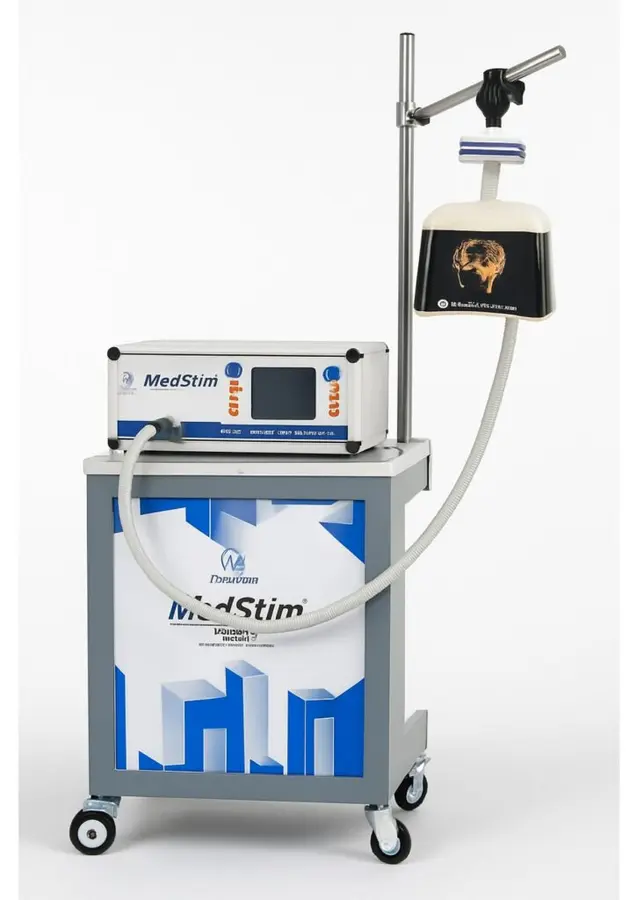
- The MS-100 offers 0.5–100 pps, Theta Burst and multiple coil options.
Alternatives and adjuncts
tDCS is a lower-cost, portable option widely studied in stroke rehabilitation. See tDCS in stroke rehabilitation.
Contact RS Enterprises to discuss neuromodulation for your rehab centre.
rTMS Machine MS-100
Flagship rTMS — up to 100 pps, H-coil and double-cone support. ₹20 lakh – ₹24 lakh
Frequently Asked Questions
Can rTMS restore movement after stroke?
It may support recovery when combined with therapy; results vary and research continues.
Is tDCS also used in stroke rehab?
Yes, tDCS is widely studied in stroke rehabilitation.
Who should deliver rTMS in rehab?
Trained teams with medical oversight, following safety screening.
This article is for general information for healthcare buyers and professionals and is not medical advice. Clinical decisions should be made by qualified practitioners.


