Pure Tone Audiometry Basics: Procedure and Reading an Audiogram
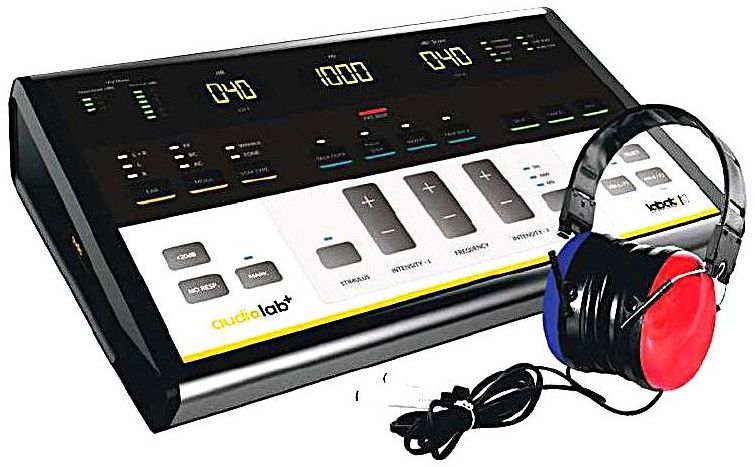
Pure tone audiometry is the foundation of hearing assessment.
The procedure
- The patient wears headphones (air conduction) and responds to tones.
- The tester finds the threshold, the softest level heard reliably, at each frequency (typically 250–8000 Hz).
- A bone vibrator behind the ear tests bone conduction.
- Masking is used when needed to isolate the test ear.
The audiogram
- X-axis: frequency (Hz).
- Y-axis: hearing level (dB HL); louder is lower on the chart.
- Symbols: O right ear air, X left ear air, < > bone conduction (with masked variants).
Types of hearing loss
| Type | Pattern |
|---|---|
| Conductive | Bone normal, air reduced (air-bone gap) |
| Sensorineural | Air and bone reduced equally |
| Mixed | Both reduced with an air-bone gap |
Degrees of severity
Grading systems vary. The WHO (2021) classification grades hearing from normal through mild, moderate, moderately severe, severe and profound, based on the average threshold in the better ear.
Beyond pure tones
Speech audiometry, tone decay, SISI and ABLB help with further diagnosis. A two-channel diagnostic audiometer such as the AudioLab+ supports all of these.
See the audiometer buying guide.
Digital Audiometry Machine
Two-channel diagnostic audiometer — pure tone, speech and free field. ₹1.1 lakh – ₹1.35 lakh
Frequently Asked Questions
What is a normal hearing threshold?
Classification schemes differ; WHO’s 2021 grading treats thresholds below 20 dB HL as normal hearing.
Why is masking needed?
To stop the better ear from hearing sounds meant for the test ear.
How long does the test take?
About 15–30 minutes.
This article is for general information for healthcare buyers and professionals and is not medical advice. Clinical decisions should be made by qualified practitioners.