Audiometer Buying Guide for ENT Clinics and Hospitals
Audiometers are essential in ENT clinics, audiology centres and occupational health. Here is how to choose one.
Screening vs diagnostic
- Screening audiometers: basic air-conduction tones.
- Diagnostic audiometers: air, bone, speech, masking and special tests, used for clinical diagnosis.
Key specifications
| Feature | AudioLab+ |
|---|---|
| Channels | Two |
| Air conduction | 125 – 8000 Hz |
| Bone conduction | 250 – 8000 Hz |
| Free field | 125 – 8000 Hz |
| Intensity (1 kHz) | -10 to +120 dB HL |
| Masking | Wideband, narrowband, speech noise |
| Special tests | TDT, SISI, ABLB |
| Speech | Live voice and recorded, automated scorer |
| Software | AudioSoft (PC) |
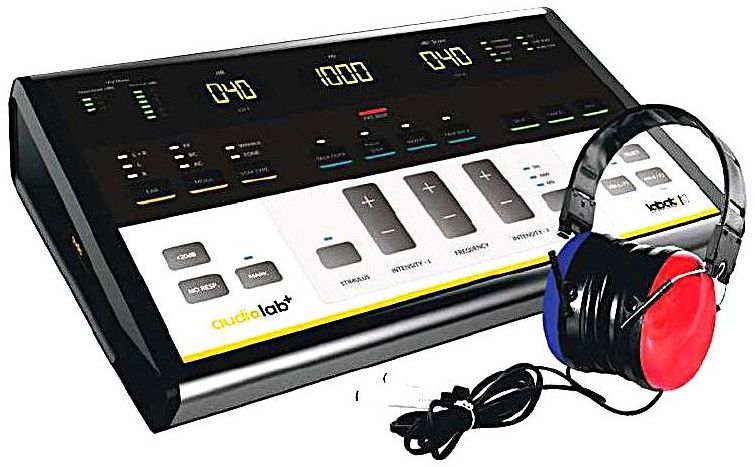
See the AudioLab+ digital audiometer.
Why two channels matter
Two independent channels allow proper masking and comparison tests, which are essential for accurate diagnosis in asymmetric hearing loss.
Room requirements
A sound-treated booth or quiet room keeps ambient noise within acceptable limits.
Calibration
Calibrate at installation and periodically after that. Stable digital circuits reduce drift, but scheduled calibration is still important.
Price
The AudioLab+ costs ₹1.10–1.35 lakh (ex-GST).
Learn the basics in pure tone audiometry. Request a demo.
Digital Audiometry Machine
Two-channel diagnostic audiometer — pure tone, speech and free field. ₹1.1 lakh – ₹1.35 lakh
Frequently Asked Questions
Do I need a sound-treated booth?
For accurate diagnostic audiometry, a sound-treated room or booth is recommended.
How often should an audiometer be calibrated?
Follow manufacturer and standard recommendations, commonly at least annually.
Can audiometry be done on children?
Yes, with paediatric techniques; free-field VRA/COR helps.
This article is for general information for healthcare buyers and professionals and is not medical advice. Clinical decisions should be made by qualified practitioners.