
Heart Rate and HRV Biofeedback: Building Stress Resilience
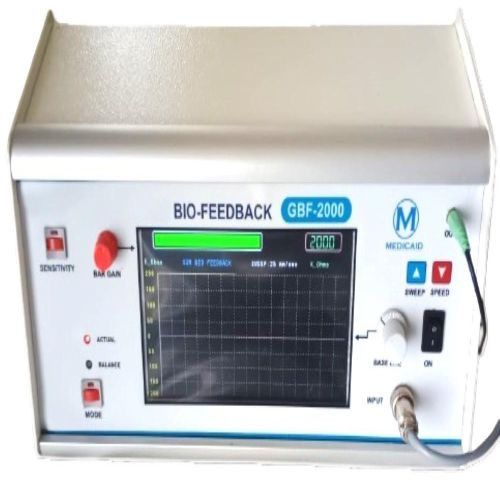
Heart rate naturally rises and falls with breathing. This variability (HRV) is a marker of flexible autonomic regulation. HRV biofeedback helps people strengthen it through breathing training.
How it works
- A pulse sensor or ECG measures heart rate beat by beat.
- The display shows heart rate rising and falling with each breath.
- The patient practises slow, paced breathing to find the rate that gives the largest oscillations, known as resonance breathing.
- With practice, they can use this breathing anywhere to calm their physiology.
Clinical uses
- Stress and anxiety management.
- Panic and hyperventilation patterns, often combined with respiration feedback.
- Cardiac rehabilitation, under medical supervision.
- Performance and resilience programmes.
Equipment
- Pulse module (PBF-3000): pulse rate 0–200 with Actual and Balance modes.
- ECG module (EBF-9000): heart rate and ECG wave.
- Respiration module (EBF-8000): breathing rate and pattern.
- PC-based CBF-206: combines pulse, respiration, ECG and more.
See the digital biofeedback modules.
Session tips
- Teach diaphragmatic breathing first.
- Use a breathing pacer on screen.
- Encourage short daily home practice.
- Track progress over sessions.
Related: GSR biofeedback for anxiety.
Digital Biofeedback Machine
Portable single-parameter biofeedback units — GSR, EEG, EMG, pulse, respiration, ECG. ₹75,000 – ₹86,000
Frequently Asked Questions
What is resonance breathing?
Slow breathing (often around 6 breaths per minute) that maximises heart rate oscillations.
Is HRV biofeedback safe for heart patients?
It is used in cardiac rehab programmes under medical supervision.
Can HRV be measured with a finger sensor?
Yes, pulse sensors can approximate heart rate patterns; ECG is more precise.
This article is for general information for healthcare buyers and professionals and is not medical advice. Clinical decisions should be made by qualified practitioners.


