
Buying Medical Equipment Through GeM: A Guide for Government Hospitals
Government hospitals, AIIMS, medical colleges and public health programmes buy most equipment through the Government e-Marketplace (GeM). Here is how to make GeM procurement work well for specialised medical devices.
Procurement routes
Depending on purchase value and the current GeM and General Financial Rules:
- Direct purchase for lower-value items.
- L1 comparison among multiple sellers.
- Bid / reverse auction for higher-value purchases.
Always follow your organisation’s current procurement rules.
Writing good specifications
- Describe clinical requirements (channels, modes, features) rather than brand names.
- Include installation, demo and training.
- Specify the warranty (e.g., 1 year) and CMC/AMC expectations.
- Ask for CE marking and applicable CDSCO compliance.
- Include accessories and consumables to be supplied.
- Define delivery timelines and the site.
Evaluating sellers
- Authorisation from the manufacturer or OEM.
- Past supplies to similar institutions.
- Regional service capability.
- ISO certification and MSME status.
RS Enterprises is GeM and GST registered, ISO 9001:2015 certified, MSME registered and an authorised Medicaid Systems dealer, with installations at AIIMS Guwahati, AIIMS Kalyani, Command Hospital Kolkata and more. See our certificates.
Common categories bought through GeM
After the order
Coordinate the delivery schedule, site readiness, installation, training and the warranty start date.
Contact us for GeM listing details and specification support.
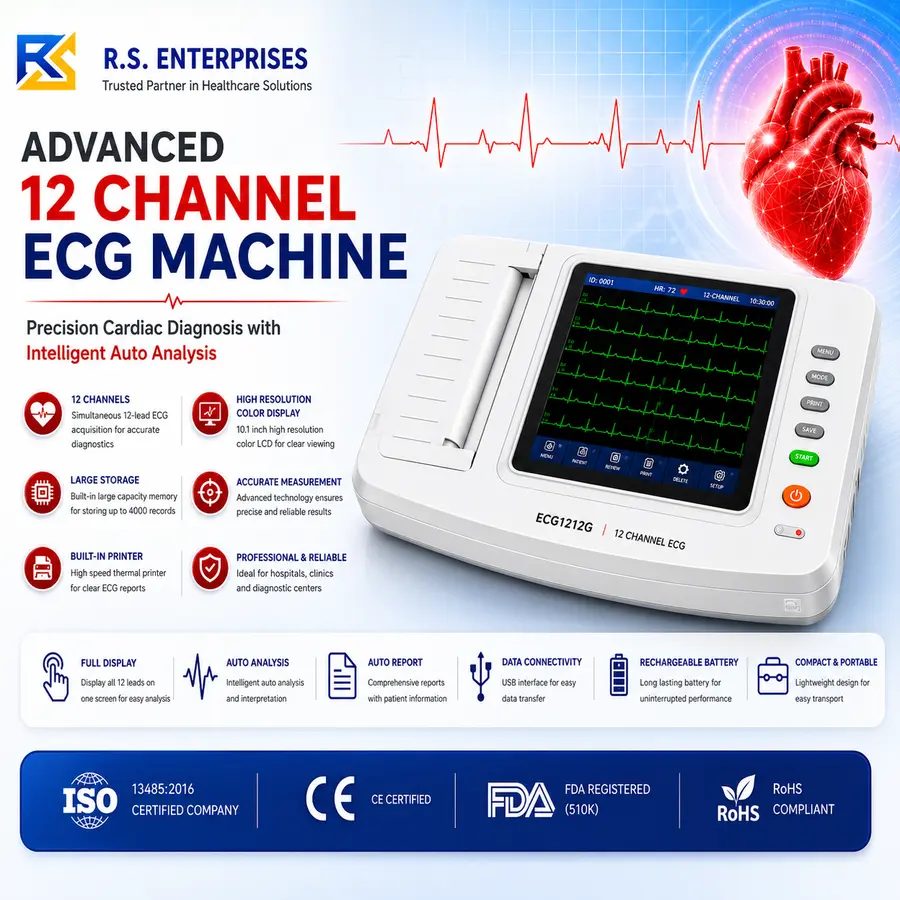
12 Channel ECG Machine
12 channel interpretive ECG with 5" touch display and A4 printer. ₹60,000 – ₹1 lakh
Frequently Asked Questions
Is RS Enterprises on GeM?
Yes, RS Enterprises is a GeM registered seller.
Can installation and training be included?
Yes — specify them in the requirement or bid.
Which documents should buyers check?
Certification (CE/CDSCO as applicable), seller credentials, warranty and service terms.
This article is for general information for healthcare buyers and professionals and is not medical advice. Clinical decisions should be made by qualified practitioners.