
EMG Biofeedback for Tension Headache and Muscle Relaxation
Tension-type headache and stress-related neck pain often involve muscle tension that people do not notice. EMG biofeedback makes that tension visible so they can learn to release it.
What EMG biofeedback measures
Surface electrodes over a muscle record its electrical activity in microvolts. Higher values mean more tension.
Sensor placement
- Frontalis. On the forehead, a common choice for tension headache and general relaxation.
- Trapezius / neck. For neck and shoulder tension.
- Masseter. For jaw clenching.
Session structure
- Clean the skin and place the electrodes.
- Record baseline muscle activity.
- Teach relaxation techniques such as progressive muscle relaxation, breathing and posture correction.
- The patient watches EMG levels fall in response.
- Transfer the skills to everyday situations through home practice.
In rehabilitation
The same principle works in reverse to activate weak muscles after injury or stroke. Feedback helps patients recruit the right muscles during exercises. See EMG in physiotherapy and rehab.
Equipment
- The MBF-4000 EMG module shows EMG in µV with visual and audio feedback (₹80,000 incl. GST).
- The CBF-206 PC system combines EMG with other signals and reports.
Diagnostic EMG is different
Biofeedback EMG is for therapy. Diagnosis of nerve and muscle disease needs a diagnostic EMG/NCV system. See needle vs surface EMG.
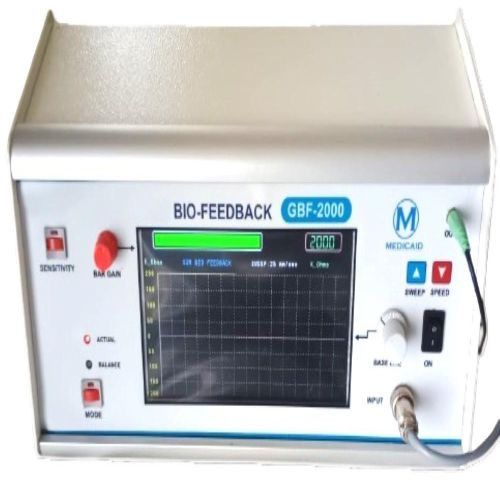
Digital Biofeedback Machine
Portable single-parameter biofeedback units — GSR, EEG, EMG, pulse, respiration, ECG. ₹75,000 – ₹86,000
Frequently Asked Questions
Which muscles are monitored for headache?
Commonly the frontalis (forehead) and trapezius/neck muscles.
Is it the same as diagnostic EMG?
No — biofeedback uses surface sensors for therapy, not needle EMG for diagnosis.
How long before benefits?
Programmes typically run several weeks with home practice.
This article is for general information for healthcare buyers and professionals and is not medical advice. Clinical decisions should be made by qualified practitioners.


