Needle EMG vs Surface EMG: Differences and Uses
"EMG" can mean two quite different techniques. Knowing the difference helps buyers choose the right equipment.
Needle EMG
A thin concentric or monopolar needle is inserted into the muscle and records:
- Insertional activity.
- Spontaneous activity at rest, such as fibrillations and positive sharp waves, which point to denervation.
- Motor unit potentials (MUPs) during contraction: their size, shape and recruitment.
Uses: diagnosing neuropathy versus myopathy, radiculopathy, motor neuron disease and myositis. It is the diagnostic standard.
Surface EMG
Electrodes on the skin record the summed electrical activity of many muscle fibres underneath.
Uses:
- Nerve conduction studies (CMAP recording).
- Biofeedback for muscle relaxation or activation.
- Kinesiology and sports science.
- Research and ergonomics.
Comparison
| Feature | Needle EMG | Surface EMG |
|---|---|---|
| Invasive | Yes (minimally) | No |
| Detail | Individual motor units | Summed activity |
| Main use | Diagnosis | NCS, biofeedback, research |
| Operator | Trained physician | Technician or therapist |
Equipment
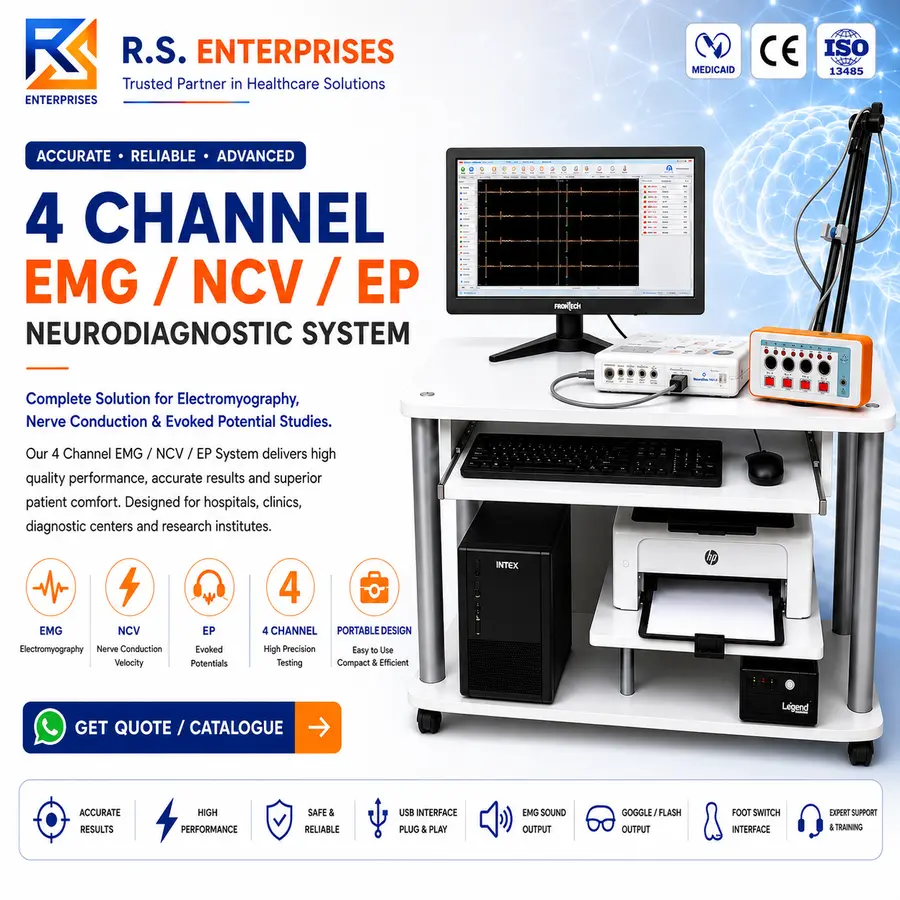
- Diagnostic EMG/NCV/EP systems such as the NEUROSTIM 4 Channel and NS-2 support needle EMG, surface recordings and NCS.
- Biofeedback devices such as the EMG biofeedback module use surface EMG for therapy.
Not sure which you need? Our team can help. Contact RS Enterprises.
EMG / NCV / EP Machine (4 Channel)
Dual channel EMG/NCV/EP upgradeable to 4 channels. ₹2 lakh – ₹3 lakh
Frequently Asked Questions
Can surface EMG replace needle EMG for diagnosis?
Generally no; needle EMG remains the standard for diagnosing neuromuscular disease.
Is needle EMG safe?
Yes when done by trained clinicians with sterile single-use needles.
Where is surface EMG used most?
Biofeedback, sports science, ergonomics and research.
This article is for general information for healthcare buyers and professionals and is not medical advice. Clinical decisions should be made by qualified practitioners.