Top 10 Diagnostic and Therapy Machines for Neurology and Psychiatry Hospitals
Building or upgrading a neurology and psychiatry hospital? These ten machines form the core of a modern unit.
1. Routine EEG
Role: epilepsy diagnosis, encephalopathy and ICU monitoring. Price: about ₹1.1–1.45 lakh. 24 channel EEG
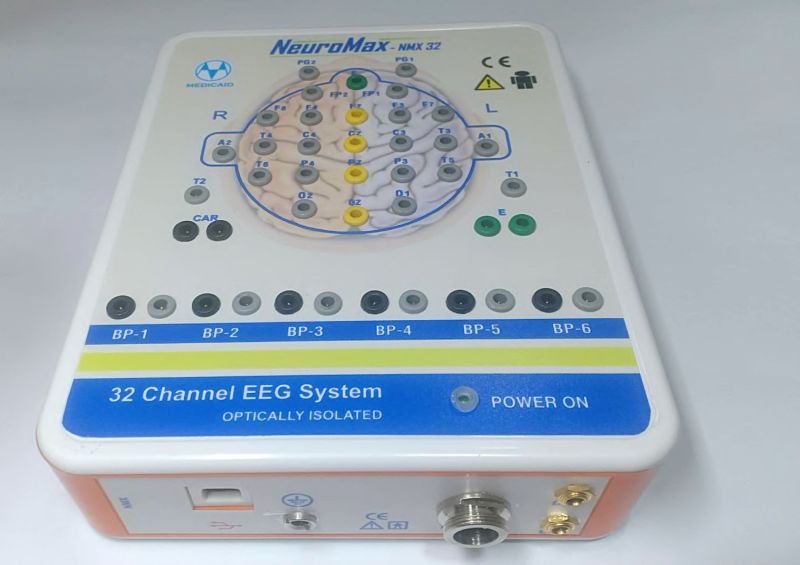
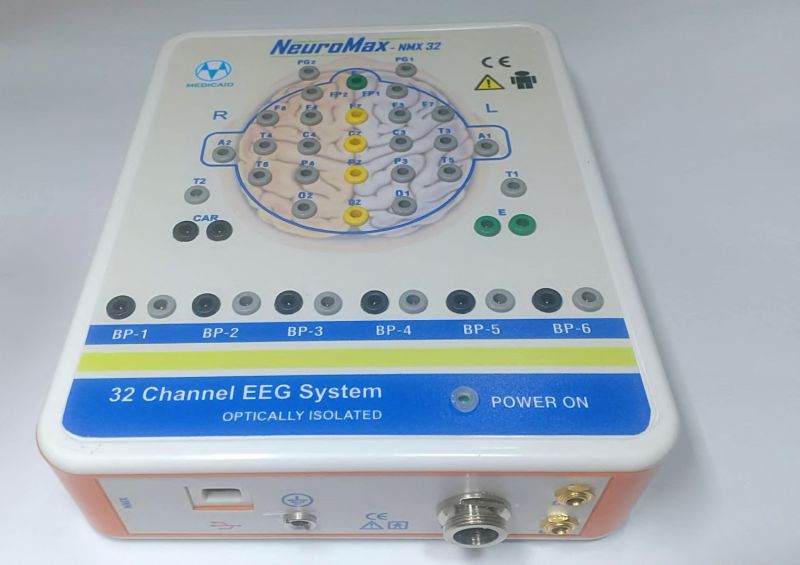
2. Video EEG
Role: epilepsy monitoring and event classification. Price: about ₹1.55–5 lakh. 32 channel video EEG · 64 channel
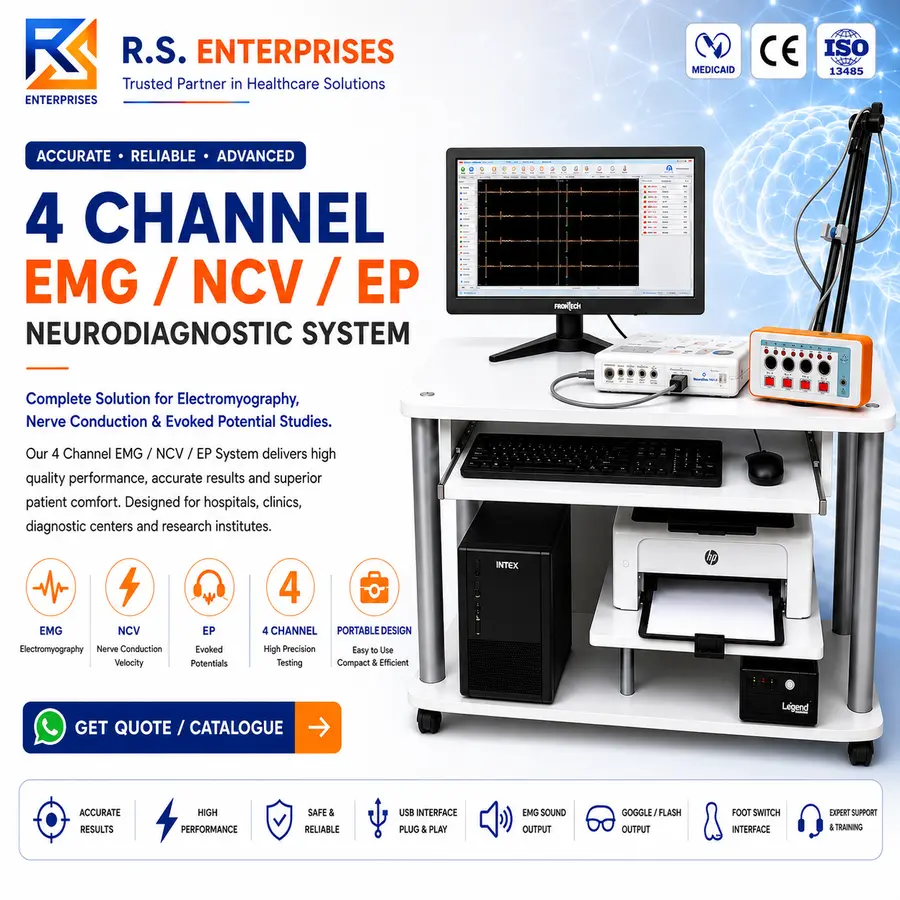
3. EMG/NCV/EP system
Role: neuropathy, radiculopathy, myopathy, evoked potentials. Price: about ₹2–3 lakh. NEUROSTIM
4. rTMS
Role: treatment-resistant depression, OCD. Price: ₹20.40–22.40 lakh. MS-50
5. ECT
Role: severe depression, catatonia, psychosis. Price: ₹84,000–5 lakh. Brief pulse ECT
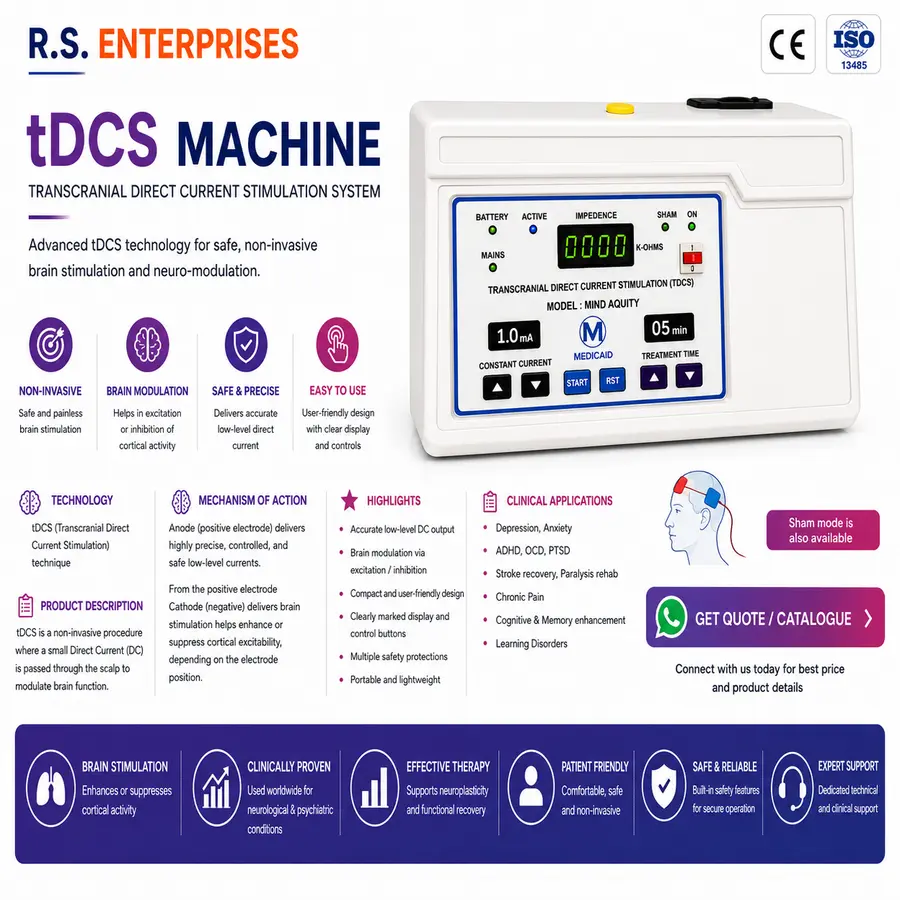
6. tDCS
Role: adjunct neuromodulation, research, rehab. Price: ₹75–80k. MA-tDCS
7. Biofeedback
Role: stress, anxiety, relaxation training. Price: ₹80,000–3 lakh. CBF-206
8. MBT behaviour therapy machine
Role: EST and behaviour therapy in psychiatry and de-addiction. Price: ₹80–90k. MBT-498
9. ECG
Role: baseline cardiac assessment (required before ECT and many drugs). Price: from ₹30,000. 12 channel ECG
10. PFT / spirometer
Role: respiratory assessment, pre-anaesthesia evaluation. Price: from ₹35,000. SPIROEXCELL
Planning tips
- Prioritise by caseload and services offered.
- Group purchases for better pricing and a single service contact.
- Plan rooms and power for each system.
RS Enterprises supplies all ten categories with installation, training and service. Request a hospital package.
32 Channel Video EEG Machine
32 channel digital video EEG for epilepsy centres and long-term monitoring. ₹1.55 lakh – ₹1.75 lakh
Frequently Asked Questions
Which machine should a new neurology department buy first?
Usually an EEG, followed by EMG/NCV.
Which is first for psychiatry?
ECT is a core requirement for inpatient psychiatry; rTMS for outpatient treatment-resistant depression.
Can these be bought on GeM?
Yes, through RS Enterprises’ GeM listing.
This article is for general information for healthcare buyers and professionals and is not medical advice. Clinical decisions should be made by qualified practitioners.