
tDCS vs rTMS: Key Differences for Clinics and Researchers
tDCS and rTMS are the two most widely used non-invasive brain stimulation techniques. Both modulate brain activity, but they differ in nearly every practical respect.
Mechanism
- rTMS. Magnetic pulses induce electrical currents strong enough to make neurons fire in a focal cortical area.
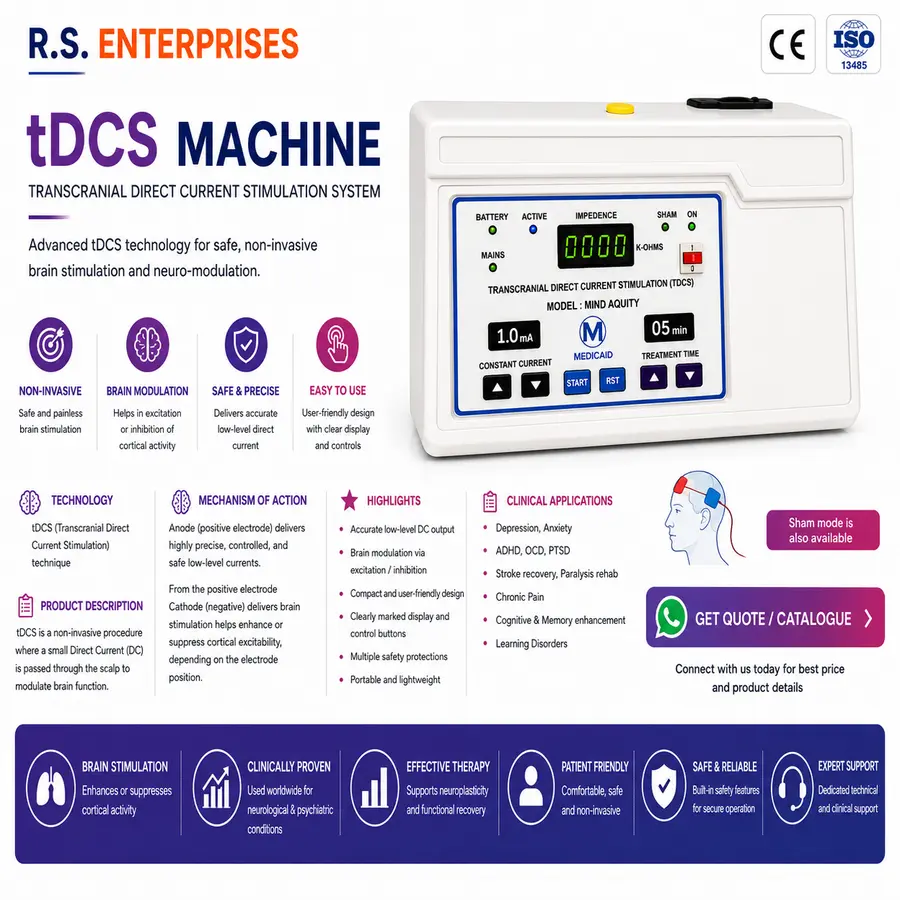
- tDCS. A weak constant current changes neuronal membrane potentials and makes firing more or less likely. It modulates activity rather than triggering it.
Side by side
| Factor | tDCS | rTMS |
|---|---|---|
| Stimulus | 1–2 mA direct current | Magnetic pulses |
| Focality | Diffuse (better with HD electrodes) | Focal |
| Session | 20–30 min | ~3 min (iTBS) to ~40 min |
| Sensation | Tingling | Tapping, clicks |
| Portability | Handheld | Console + coil + chair |
| Cost | ~₹75–80k | ₹20–24 lakh |
| Regulatory backing | Research and growing clinical use | Cleared for depression and OCD in several countries |
| Research blinding | Easy SHAM | Sham coils needed |
When to choose tDCS
- Research programmes needing a low-cost, blinded tool.
- Rehabilitation paired with physiotherapy or speech therapy.
- Adjunct neuromodulation alongside other treatments.
See the MA-tDCS.
When to choose rTMS
- A treatment-resistant depression or OCD service.
- When you need focal, well-established protocols.
Using both
Many psychiatry and neurology centres use rTMS for established indications and tDCS for research, rehab and adjunct protocols.
Talk to our team to plan the right combination.
tDCS Machine
Touchscreen tDCS with SHAM mode, 0.5–4 mA and impedance monitoring. ₹75,000 – ₹80,000
Frequently Asked Questions
Which is more effective for depression?
rTMS has stronger regulatory backing; tDCS is supported by research and is used in some settings. Clinical judgement applies.
Can tDCS be done at home?
Supervised home-based protocols exist in research; clinical use should follow clinician guidance.
Is rTMS painful?
Mild scalp discomfort is common; it is generally well tolerated.
This article is for general information for healthcare buyers and professionals and is not medical advice. Clinical decisions should be made by qualified practitioners.


