Pulmonology
Spirometer Calibration and Infection Control: Best Practices
Accurate, hygienic spirometry protects patients and makes results trustworthy.
Calibration and verification
- Verify volume accuracy with a 3-litre calibration syringe at the frequency your lab policy and the manufacturer recommend.
- Record results in a QC log.
- Investigate drift. Clean or replace the turbine if readings fall outside tolerance.
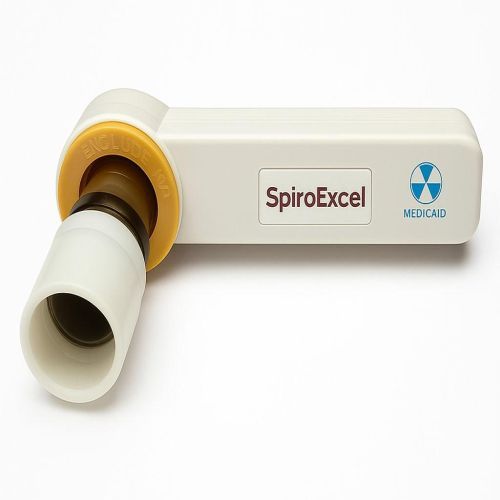
- Environmental settings. Make sure ambient temperature and pressure are entered correctly for BTPS correction. The SPIROEXCELL applies automatic BTPS correction.
Infection control
- Disposable mouthpieces for every patient.
- Bacterial/viral filters between patient and sensor.
- Nose clips: disposable or disinfected.
- Hand hygiene before and after each test.
- Surface cleaning between patients.
- Space appointments and ventilate the room in respiratory infection seasons.
Turbine and sensor care
- Follow the manufacturer’s cleaning instructions.
- Avoid harsh chemicals that could damage parts.
- Let parts dry completely before use.
QC log template
| Date | Syringe volume | Measured | Within tolerance? | Action | Initials |
|---|
Staff training
Train staff on coaching, quality criteria and hygiene. RS Enterprises includes this in installation training.
See also spirometry interpretation basics.
Featured product
PFT Machine (PC-Based Spirometer)
USB PC-based spirometer with digital turbine and automatic interpretation. ₹35,000 – ₹50,000
Frequently Asked Questions
Do turbine spirometers need daily calibration?
Many turbine devices need periodic verification rather than daily calibration — follow manufacturer guidance and lab policy.
What is a calibration syringe?
A precise 3-litre syringe used to verify volume accuracy.
Are filters necessary?
They are strongly recommended for infection control.
This article is for general information for healthcare buyers and professionals and is not medical advice. Clinical decisions should be made by qualified practitioners.