Polygraph vs Physiograph: What’s the Difference in the Lab?
The terms "physiograph" and "polygraph" overlap in physiology labs and often cause confusion.
Physiograph
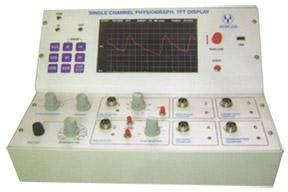
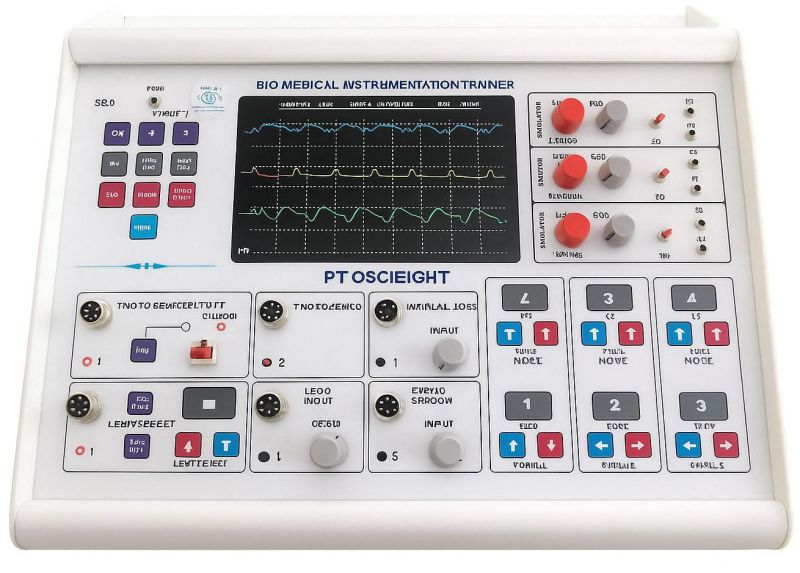
A recorder for physiological signals, often with one to three channels, used widely for student practicals. Examples are the single channel student physiograph and the three channel physiograph.
Polygraph (physiology)
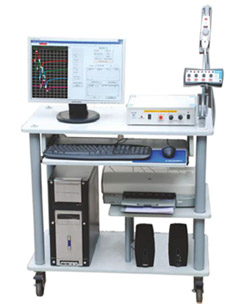
"Poly" means many. A physiology polygraph is a multi-channel physiograph that records several signals at once, such as ECG, EMG, EEG and respiration. An example is the PHYSIOPAC 4 Channel Digital Polygraph.
Not a lie detector
Forensic polygraphs measure physiological responses in investigative settings. The laboratory polygraphs described here are teaching and research instruments.
Comparison
| Factor | Physiograph (1–3 ch) | Polygraph (4–8 ch) |
|---|---|---|
| Channels | 1–3 | 4–8 |
| Main use | Student practicals | Demonstrations, research |
| Price | ₹90,000 – ₹1.75 lakh | ₹2.51 lakh – ₹5.5 lakh |
Choosing
Most colleges use several student physiographs and one or two polygraphs. See physiograph machines for medical colleges.
Digital Polygraph Machine (4 Channel)
4 channel digital polygraph / physiograph for physiology teaching and research. ₹2.51 lakh – ₹2.9 lakh
Frequently Asked Questions
Is a physiology polygraph a lie detector?
No — it is a multi-channel recorder for physiological experiments.
How many channels do I need for research?
Often 4–8, depending on the experiment.
Can a polygraph record ECG and respiration together?
Yes — that is its main advantage.
This article is for general information for healthcare buyers and professionals and is not medical advice. Clinical decisions should be made by qualified practitioners.