
ECT Seizure Monitoring with EEG and EMG: Why It Matters
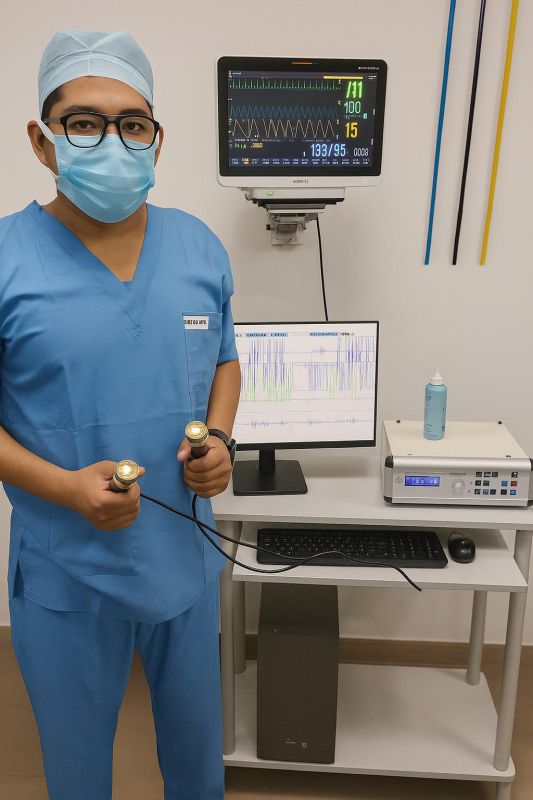
In modified ECT, anaesthesia and muscle relaxants make treatment safe and comfortable, but they also hide most visible convulsions. Monitoring confirms that a therapeutic seizure has actually happened.
Why monitoring matters
- Missed seizures mean ineffective treatment.
- Prolonged seizures need prompt management.
- Documentation supports quality care, teaching and audit.
EEG monitoring
Two or more EEG channels (often frontal) are recorded during and after stimulation. Signs of a good seizure include:
- High-amplitude, rhythmic activity.
- Good inter-hemispheric symmetry and coherence.
- Clear termination with post-ictal suppression.
EMG and motor monitoring
- EMG recorded from a limb shows motor seizure activity.
- Cuff technique. A BP cuff inflated above systolic pressure on one limb before the relaxant is given keeps that limb visible for observation.
- Optical motion sensors (on computerised ECT) give an objective movement measure.
ECG monitoring
ECT causes predictable heart-rate and blood-pressure changes. ECG monitoring is part of safe practice.
Equipment options
| Model | Monitoring |
|---|---|
| BPE-591 | Stimulation with impedance check |
| BPE-791 | 2-channel EEG/ECG + printer |
| Computerised 5-channel ECT | EEG + ECG + EMG + optical motion, digital archive |
See the computerised ECT for full monitoring, or the brief pulse range.
Good practice
- Check electrode impedance before every stimulus.
- Record seizure duration (motor and EEG) and the quality markers.
- Keep a written plan for prolonged seizures.
- Review records to adjust the dose across the course.
RS Enterprises trains ECT teams on monitoring at installation. Contact us.
Computerised ECT Machine
5-channel PC-based brief pulse ECT with EEG, ECG and EMG monitoring. ₹4 lakh – ₹5 lakh
Frequently Asked Questions
What is the cuff technique?
A blood pressure cuff inflated on one limb before the muscle relaxant keeps that limb free of relaxant so the motor seizure can be observed.
How long should a seizure last?
Traditionally a motor seizure of roughly 20 seconds or more has been used as a guide, but EEG quality also matters.
What if no seizure occurs?
Re-stimulate at a higher dose as per protocol.
This article is for general information for healthcare buyers and professionals and is not medical advice. Clinical decisions should be made by qualified practitioners.


